
Portuguese IRS & Personal Income Tax
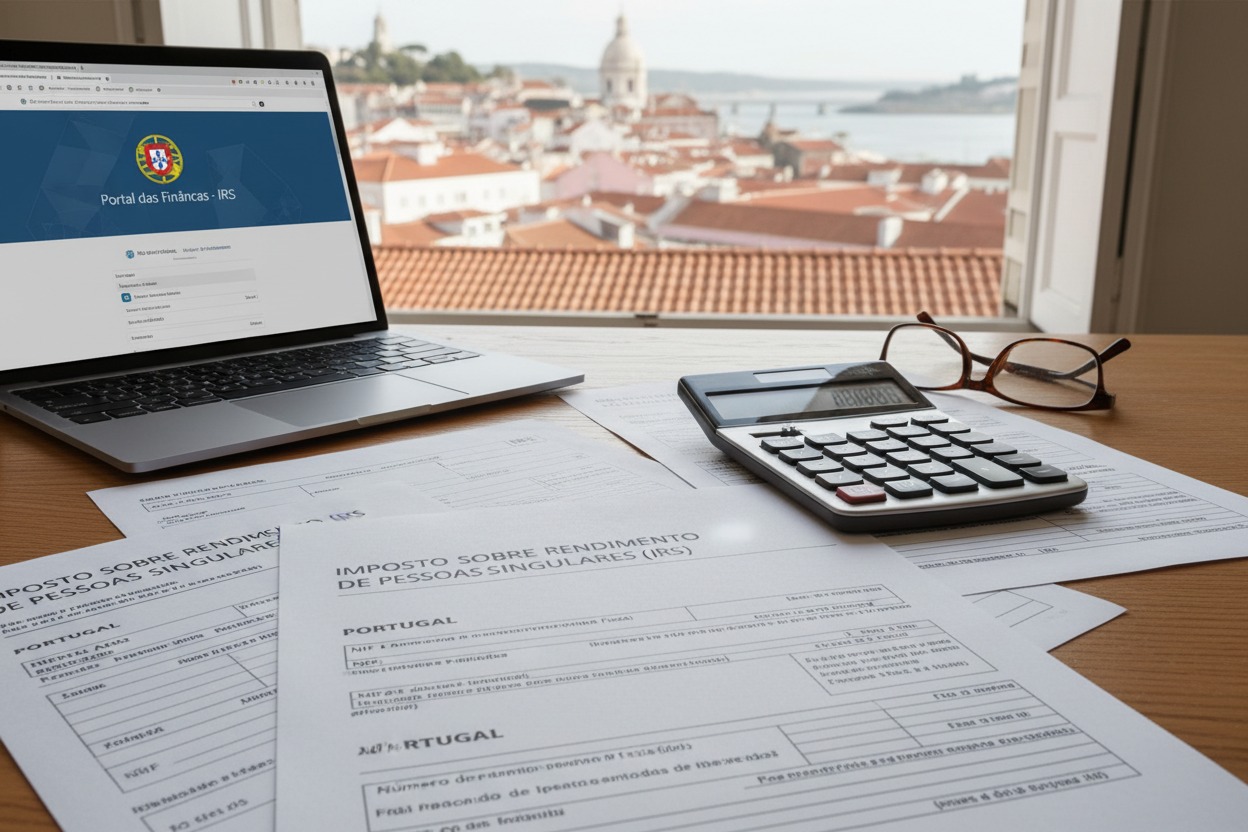
The Portuguese Personal Income Tax (IRS – Imposto sobre o Rendimento das Pessoas Singulares) applies to individuals who earn income in Portugal. Understanding how the system works is essential for anyone living, working or earning income in Portugal, including foreign residents and expats.
Whether you are employed, self-employed, retired or receiving income from abroad, your tax obligations will depend on your tax residency status, the type of income you receive and the applicable tax rules.
In this guide, we explain how the Portuguese IRS system works, who needs to file a tax return, how income is taxed and what you should know about deadlines, deductions and payments.
Last updated: November 2026
1. Understanding the Portuguese IRS System
Portuguese IRS is the personal income tax levied on individuals. It generally applies to income earned during a calendar year, with the final tax calculation taking into account the applicable tax rates, deductions and allowances.
The Portuguese tax system distinguishes between different categories of income, including:
- Employment income (Category A): Salaries and other employment-related payments.
- Self-employment and business income (Category B): Income from independent professional activities and businesses.
- Investment income (Category E): Interest, dividends and certain other returns on investments.
- Rental income (Category F): Income received from renting out property.
- Capital gains and other increases in wealth (Category G): Certain gains from the sale of assets, including property and investments.
- Pension income (Category H): Retirement and other qualifying pension payments.
The way each type of income is declared and taxed can differ. Some income may be subject to withholding at source, while other income must be reported through the annual tax return.
2. Who Needs to File a Portuguese IRS Tax Return?
Your obligation to file a Portuguese tax return depends mainly on your tax residency status and the type of income you receive.
As a general rule:
- Portuguese tax residents must generally declare their worldwide income, including income earned outside Portugal, subject to applicable exemptions, tax treaties and special tax regimes.
- Non-residents are generally taxed in Portugal on income considered to have a Portuguese source. A tax return may be required where the income has not already been subject to final withholding tax.
This distinction is particularly important for expats who continue to receive salaries, pensions, rental income or investment income from another country after moving to Portugal.
Not everyone has the same filing obligations, and certain exemptions or simplified procedures may apply.
3. Portuguese IRS Tax Rates and How Tax Is Calculated
Portugal uses a progressive personal income tax system. This means that different portions of taxable income are subject to different tax rates, according to the applicable IRS brackets.
However, not all income is necessarily taxed at these progressive rates. Certain types of income may instead be subject to autonomous or flat tax rates. Examples include:
- Interest and dividends: Generally subject to a 28% flat rate.
- Capital gains: Certain capital gains are generally subject to a 28% rate, although specific rules and exceptions may apply.
- Rental income: Net taxable rental income is generally subject to different flat rates depending on whether the property is rented for residential or non-residential purposes.
| Rental income | Standard tax rate |
|---|---|
| Residential | 25% |
| Non-residential | 28% |
However, certain residential rental contracts may qualify for reduced tax rates or exemptions:
- Rendas Moderadas: Qualifying rental income may benefit from a reduced 10% tax rate between 2026 and 2029, subject to statutory conditions and a monthly rent ceiling of €2,300 in 2026.
- Arrendamento Acessível: Qualifying contracts under the Simplified Affordable Rental Scheme may benefit from a full IRS exemption, subject to applicable rent limits, minimum contract duration and registration requirements.
In certain circumstances, taxpayers can choose to include eligible income in their total taxable income through a process known as englobamento. This means the income is added to other income and taxed according to the progressive IRS brackets. Depending on the taxpayer’s overall income and circumstances, this may result in a lower tax liability.
The final amount of tax payable is therefore not determined by simply applying one rate to your total income. The calculation takes into account several factors, including:
- Your annual taxable income.
- The applicable tax brackets and rates.
- The type and source of income.
- Eligible deductions and tax benefits.
- Your personal and household circumstances.
- Any tax already withheld or paid during the year.
For employees and pensioners, monthly withholding tax (retenção na fonte) is generally deducted throughout the year as an advance payment towards the final IRS liability. The annual tax assessment determines whether additional tax is due or a refund is payable.
3.1 Special Tax Regimes and Tax Benefits
Certain taxpayers may qualify for special tax regimes or tax benefits that affect how their income is taxed in Portugal. These include:
- Non-Habitual Resident (NHR) regime: Although the regime is closed to most new applicants, individuals who qualified under the previous rules may continue to benefit from it during their eligible period.
- IFICI (NHR 2.0): A tax incentive for eligible individuals carrying out specific qualifying activities in Portugal, subject to strict conditions.
- IRS Jovem: A tax benefit for eligible young workers, reducing the tax payable on qualifying employment and self-employment income.
- Programa Regressar: A tax benefit for eligible former Portuguese tax residents returning to Portugal, subject to specific conditions and time limits.
Each regime has its own eligibility requirements, qualifying income and applicable tax benefits. They are not interchangeable, and some cannot be combined.
Tax rates, brackets and tax benefits may change from year to year, so it is important to check the rules applicable to the relevant tax year.
4. Filing Your Portuguese IRS Tax Return
The annual Portuguese IRS return is generally submitted online through the Portuguese Tax Authority’s Portal das Finanças.
Individuals who are required to file normally submit a Modelo 3 tax return, together with the relevant annexes for their income and personal circumstances.
Depending on your situation, the process may involve:
- Reporting employment, pension or self-employment income.
- Declaring rental income, investment income or capital gains.
- Reporting foreign income where required.
- Including information about eligible deductions and tax benefits.
- Reviewing the information provided by the Tax Authority.
- Checking the final tax assessment and any amount due or refund.
Some taxpayers may qualify for IRS Automático, a simplified pre-filled tax return. However, this option is only available to individuals who meet specific eligibility conditions. It should not be assumed that every expat or taxpayer with foreign income can use it.
If your financial situation involves several income sources, foreign assets or income from different countries, it is particularly important to check that all relevant information has been correctly reported.
5. IRS Deadlines, Payments and Tax Refunds
Portuguese IRS follows an annual tax cycle. The tax return generally relates to income earned during the previous calendar year.
The main annual filing period is normally 1 April to 30 June. After submitting the return, the Tax Authority processes the information and issues the final tax assessment.
Depending on the result:
- You may receive an IRS refund if you have paid more tax than was ultimately due.
- You may need to pay additional tax if your final liability exceeds the amounts already paid.
- You may need to correct or clarify information if the Tax Authority identifies an issue.
Missing a filing or payment deadline can result in additional charges or penalties, depending on the circumstances.
As deadlines and administrative dates can change, taxpayers should check the official calendar for each tax year.
Learn more: IRS 2026 Deadlines: What You Need to Know in 2027.
6. IRS Deductions and Tax Benefits
Portuguese taxpayers may be entitled to deductions and tax benefits that reduce their final tax liability.
Depending on the applicable rules and individual circumstances, these may include deductions related to:
- General household expenses.
- Health expenses.
- Education and training.
- Housing and rent, where eligible.
- Dependants and family circumstances.
- Certain donations and other qualifying expenses.
Some deductions are calculated using information reported to the Tax Authority by service providers, while others may require taxpayers to check, confirm or provide additional information.
It is important to review the expenses recorded in your tax account before submitting your annual return. Incorrect or missing information may affect the final tax calculation.
7. Portuguese IRS for Foreigners and Expats
For foreigners living in Portugal, understanding the Portuguese IRS system can be more complex, particularly when income is received from more than one country.
Your obligations may depend on when you became a Portuguese tax resident, where your income originates and whether a double taxation agreement applies.
Common situations include:
- Moving to Portugal while continuing to work for a foreign employer.
- Receiving a pension from another country.
- Having rental property or investments abroad.
- Working as a freelancer or independent professional for international clients.
- Receiving dividends, interest or capital gains from foreign investments.
- Having income that may be taxable in both Portugal and another country.
Portuguese tax residents generally need to report foreign income in Portugal, even when tax has already been paid abroad. Applicable tax treaties and foreign tax credits may help prevent the same income from being taxed twice, subject to the relevant rules.
Special tax regimes, including the former Non-Habitual Resident (NHR) regime and the current IFICI regime, may also affect how certain individuals are taxed. Eligibility and treatment depend on the specific conditions of each regime.
For this reason, expats should consider their Portuguese tax obligations together with their wider international tax situation.
Need Help Understanding Your Portuguese IRS obligations or filing your tax return?
Our team can guide you through the process and help ensure your taxes are handled correctly.
Frequently Asked Questions
What is IRS in Portugal?
IRS stands for Imposto sobre o Rendimento das Pessoas Singulares, Portugal’s personal income tax. It applies to individuals receiving taxable income, subject to the rules applicable to residents and non-residents.
Do I have to file a Portuguese tax return every year?
Not necessarily. Filing obligations depend on your residency status, the type and amount of income you receive and whether any exemptions apply. Many individuals are required to submit an annual IRS return.
When do I need to submit my Portuguese IRS tax return?
The normal filing period is from 1 April to 30 June of the year following the year in which the income was earned. Always check the applicable annual deadlines.
Do Portuguese tax residents have to declare foreign income?
Generally, yes. Portuguese tax residents must report worldwide income, including income earned abroad, subject to applicable exemptions, tax treaties and special tax regimes.
Can I file my Portuguese IRS return in English?
The Portuguese Tax Authority’s Portal das Finanças and official tax return forms are primarily in Portuguese. Foreign taxpayers may need assistance understanding the terminology and completing the relevant sections.
What is IRS Automático?
IRS Automático is a simplified, pre-filled tax return made available by the Tax Authority to eligible taxpayers. It is not available to everyone, and the information should be checked carefully before confirmation.
What happens if I do not submit my IRS return on time?
Late filing may result in penalties and other consequences, depending on the circumstances. If you have missed a deadline, you should review your obligations and take steps to regularise your situation.
Can married couples file a joint IRS return in Portugal?
Married couples and couples in a legally recognised de facto union are generally taxed separately by default, but may opt for joint taxation if they meet the applicable conditions. It is worth comparing both options before submitting the return.
Need Help With Your Portuguese IRS?
Understanding your Portuguese tax obligations can be challenging, especially when you have different types of income or financial interests in more than one country.
Our team can help you understand your IRS obligations, prepare and review your tax return, and ensure your income is reported correctly under the applicable Portuguese tax rules.
Disclaimer
This guide is for general information only and does not constitute legal, tax or accounting advice. Portuguese tax law changes frequently, and cross-border situations depend on the exact facts. You should obtain professional advice before making decisions or filing tax returns.